Indexed By
Featured Ranking
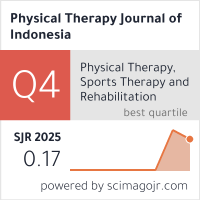
SCImago Journal Rank
Databases & Repositories

Official Archive Partners
Full archival copies of all articles published in PTJI are deposited in electronic format into the following certified repositories, ensuring permanent digital preservation independent of the publisher or journal:
Portico
Digital Preservation
PTJI content is archived in Portico, a leading digital preservation service operated by ITHAKA. Portico preserves e-journals and ensures access in the event a journal ceases publication.
View on PorticoGaruda
National Repository
Garuda (Garba Rujukan Digital) is the national academic publication portal managed by Kemendikbudristek, serving as Indonesia's official research repository and indexing platform.
View on GarudaKeepers Registry
Global Preservation Registry
The Keepers Registry (ISSN International) records which archiving organizations are preserving which e-journals, providing global transparency on the archiving status of scholarly publications.
View RegistryPersistent Identifiers & Metadata Preservation
Permanent, resolvable identifiers ensure that links to PTJI articles remain valid indefinitely, even if URLs or journal infrastructure change. These identifiers also enable automated metadata harvesting by global indexing services.
Crossref DOI
Every article published in PTJI is assigned a unique Digital Object Identifier (DOI) registered with Crossref, providing a permanent, machine-resolvable link to the article metadata and full text.
ORCID Integration
Authors are strongly encouraged to include their ORCID iD in submissions. ORCID integration ensures author credit and disambiguation persists across institutional changes and name variations.
OAI-PMH Protocol
PTJI supports the Open Archives Initiative Protocol for Metadata Harvesting (OAI-PMH), enabling automated collection of article metadata.
ISSN Registration
PTJI holds a registered ISSN (2722-0125) with the ISSN International Centre, providing a globally unique identifier for the journal title across all issues and archives.
Author Self-Archiving Policy
Authors are encouraged, and in some cases required by their funders, to deposit their work in institutional or public repositories. No embargo period applies.
Stage 1
Preprint
✓ Allowed · No EmbargoAuthors may post the original submitted manuscript (before peer review) on preprint servers such as medRxiv, bioRxiv, or OSF Preprints at any time.
Stage 2
Accepted Manuscript
✓ Allowed · No EmbargoThe peer-reviewed, author-accepted manuscript (AAM) — before typesetting and copyediting — may be deposited immediately in institutional repositories.
Stage 3
Published Version (VoR)
✓ Recommended · No EmbargoAuthors are strongly encouraged to deposit the final published PDF (Version of Record) in repositories, citing the DOI for citation tracking.
Best Practice Recommendation
When self-archiving, authors should always link their repository record to the official published article using the Crossref DOI (e.g., https://doi.org/10.xxxxx/ptji.xxxx). This ensures citation counts are unified across platforms including Scopus, Google Scholar, and Dimensions.
Funder Mandate Compliance
PTJI's archiving and self-archiving policy is aligned with major research funder mandates. Authors who receive funding from the following organizations can fulfill their open access archiving requirements by publishing in PTJI:
Plan S / cOAlition S
Immediate open access with CC BY 4.0 license and no embargo period, fully compliant with Plan S Rights Retention Strategy.
Wellcome Trust
Immediate OA publication with CC BY 4.0. Self-archiving in Europe PMC upon publication is recommended.
EU Horizon Europe
Immediate OA required. Self-archiving of the published PDF in an open repository complies with Horizon Europe mandates.
BRIN Indonesia
Authors funded by BRIN are encouraged to deposit publications in the national RIN repository and SINTA portal in addition to international repositories.
Kemendikbudristek
Publications arising research grants should be deposited in Garuda/SINTA as required by regulations.
WHO / Global Health
Health research funded under WHO programs benefits from PTJI's immediate OA policy, supporting the WHO open access to research mandate.
Digital Preservation Standards
PTJI's archiving partners adhere to internationally recognized digital preservation standards, ensuring long-term readability, integrity, and accessibility of archived content:
OAIS (ISO 14721)
Open Archival Information System reference model — the foundational standard for long-term digital preservation used by Portico.
PDF/A Format
Published articles are available in PDF format optimized for archiving (PDF/A), ensuring documents remain readable independent of future software or hardware changes.
Continuity Assurance
In the event that PTJI ceases publication or undergoes significant changes, archived copies held by Portico will be made available to ensure continued public access to all previously published articles.
Recommended Author Repositories
Authors are encouraged to self-archive their published work in the following types of repositories to maximize discoverability and fulfill funder mandates:
Institutional Repository
Your university or hospital library repository (e.g., Udayana University, Universitas Indonesia repositories).
SINTA / Garuda
Indonesia's national science and technology index.
medRxiv / OSF
International preprint servers for health science and general research preprints.
ORCID Record
Link your published article to your ORCID profile for permanent researcher-to-publication association.
ResearchGate / Academia
Open academic social networks where self-archiving the published PDF (CC BY 4.0) is permitted.
Zenodo / Figshare
CERN-operated and open repositories for research outputs including datasets, software, and publications.
ARCHIVING PARTNERS
Indexed By
Featured Ranking
SCImago Journal Rank
Databases & Repositories